
Painter, Calligrapher, Cultural Pioneer
Saadi Sinevi stands as a seminal figure in the evolution of modern Lebanese art, revered for his evocative landscapes and steadfast dedication to cultural preservation. Born in Istanbul in 1902 to an Ottoman magistrate, Sinevi’s early life was marked by transience, eventually leading him to Beirut during the First World War. His academic pursuits took him to Paris, where he studied architecture from 1918 to 1922. However, his true calling lay in the visual arts, prompting a return to Lebanon where he immersed himself in painting, calligraphy, and cultural advocacy. 
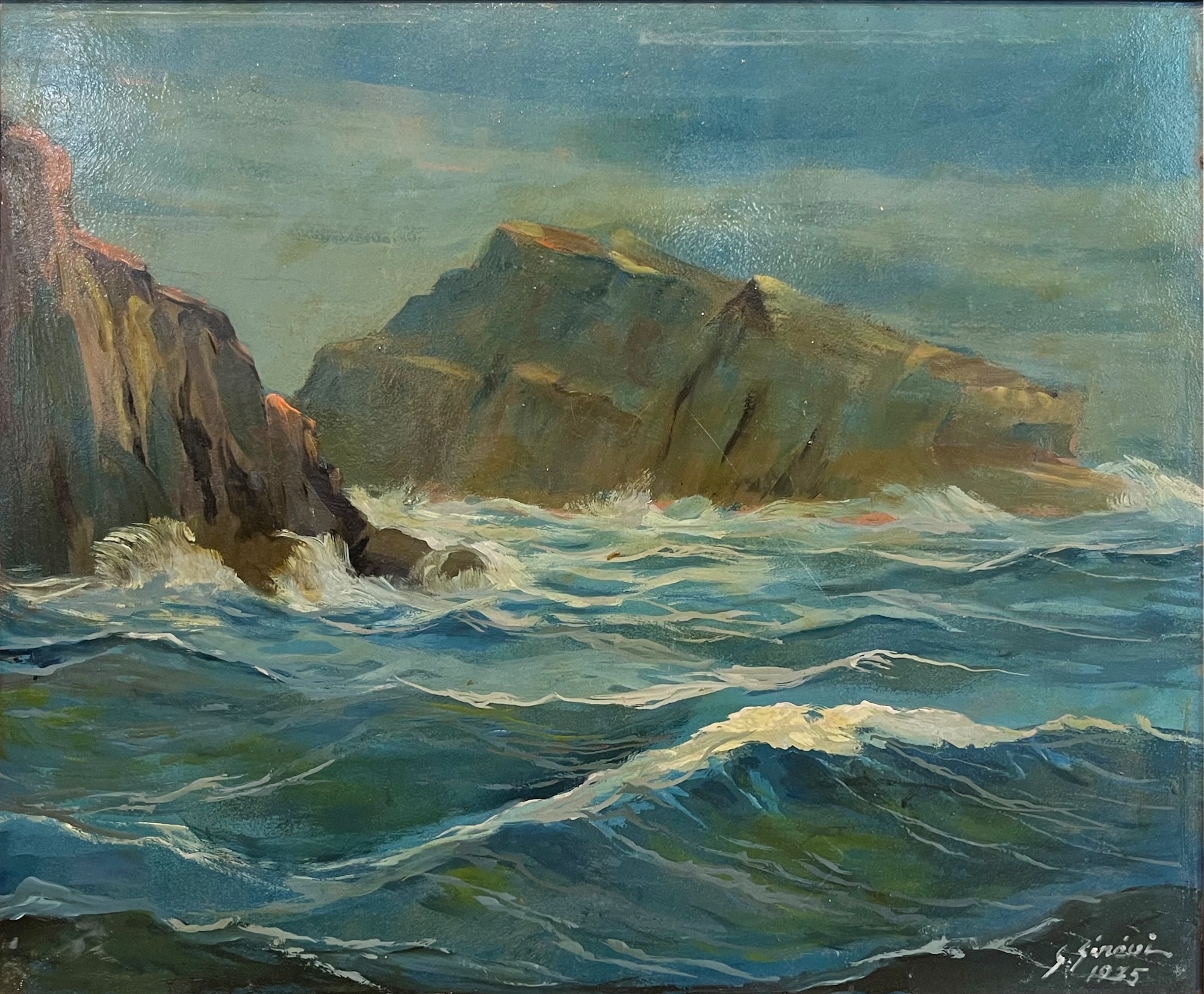
Sinevi’s oeuvre is a heartfelt homage to Lebanon’s diverse landscapes and rich heritage. His canvases vividly portray mountain valleys, coastal vistas, and traditional village scenes, rendered in a palette that captures the nation’s intrinsic beauty. Works such as Femmes Druze (1948) and Al Barouk (1944) exemplify his ability to intertwine natural splendor with cultural narratives.  
Beyond his artistic creations, Sinevi was instrumental in shaping Lebanon’s cultural landscape. Appointed by the Lebanese government, he organized significant exhibitions at the UNESCO Palace and the Lebanese Parliament between 1936 and 1942. As the founding president of the Association of Lebanese Painters and Sculptors, he championed the arts community, and in 1942, he established the magazine Voix de l’Artiste, providing a platform for artistic discourse. 
A polymath, Sinevi also excelled in calligraphy, mastering Arabic, Hebrew, and Latin scripts. His calligraphic works adorned mosques, churches, and synagogues, reflecting a commitment to interfaith harmony. Notably, he designed the iconic masthead for the Lebanese newspaper An-Nahar. 
Saadi Sinevi’s legacy is enshrined in his art and his unwavering dedication to Lebanon’s cultural identity. His works continue to inspire, serving as a testament to a life devoted to artistic excellence and national pride.

